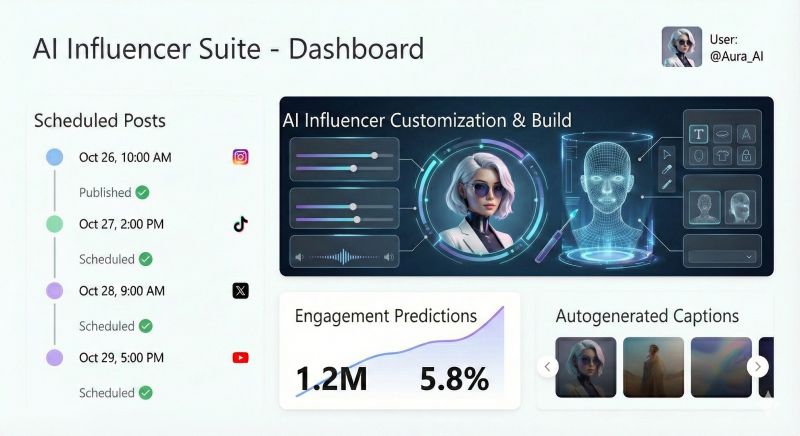
Virtual personalities like Xania Monet are attracting followers, brand deals, and fan communities built entirely on synthetic identity.
They post content daily, never age, never burn out, and never face the emotional pressure that human influencers often describe.
And here’s the part marketers are quietly paying attention to: it’s becoming extremely easy for anyone to create an AI influencer.
With tools like Synthesia, HeyGen, Luma, Reface, and high-resolution diffusion models, a person can build a digital persona with:
- A photorealistic face
- A personality and backstory
- Endless video content
- Custom outfits, locations, and product demos
- Fully automated posting schedules
This shift raises a bigger question for marketers.
If influencers became powerful because of their relatability and personal lives, what happens when brands can design influencers who never make mistakes, never miss deadlines, and never stop performing?
Influencers aren’t just people anymore. The next challenge is understanding how audiences respond to creators who exist only as code.