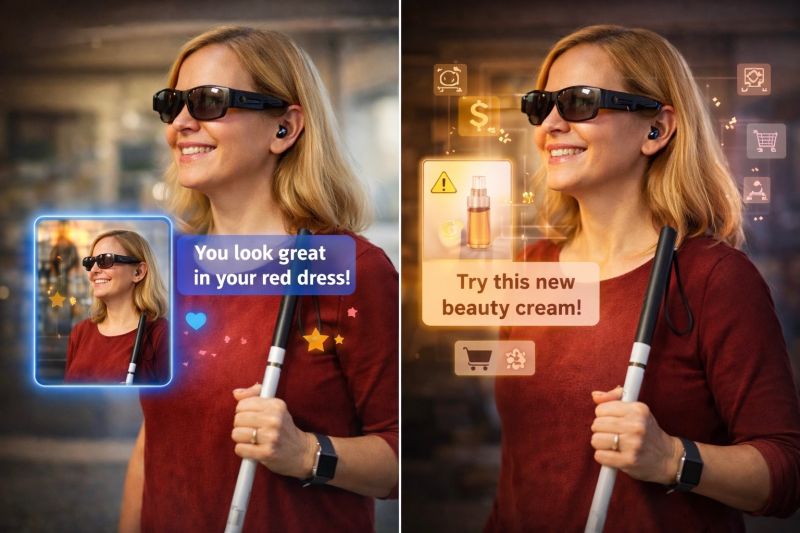
AI mirrors are changing how blind people experience their own appearance.
On the one hand, it’s powerful. AI mirrors can describe faces, outfits, and expressions, giving people who are blind a new independence and self-awareness.
But on the other hand, it’s unsettling. These systems hold data that can promote incentives and enable targeted ads.
That’s where the ethical line may start to blur.
If AI starts suggesting products or reinforcing beauty standards, it’s no longer just assisting. It’s influencing, especially in moments of vulnerability.
AI mirrors can be life-changing. But when technology interferes with self-image, ethical considerations arise.
Accessibility should empower people, not simply sell to them.
Do you see AI mirrors as a marketing advancement or an ethical concern?