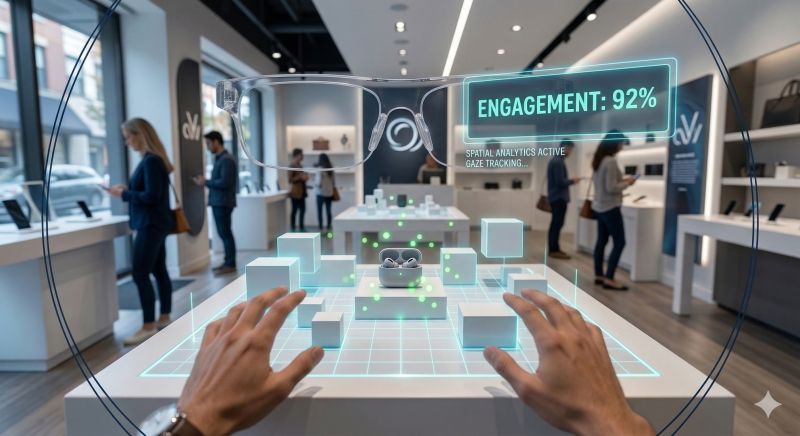
That possibility is becoming a reality as AI assistants begin interacting directly with spatial analytics data.
This allows businesses to ask more straightforward questions about user behaviour in virtual and augmented reality environments, rather than relying on technical reports.
What makes this especially interesting from a marketing perspective is not just the data itself, but also the insights you could gain from it.
If an AI assistant can interpret gaze, attention, or physical reactions through AR or immersive environments, retailers may eventually be able to adjust a storefront or product display while the consumer is still engaging with it.
This suggests a shift away from static retail design toward environments continuously shaped by real-time consumer responses.
In that kind of future, spatial data becomes more than a measurement tool.
It becomes part of the experience itself.
If a store could change its displays based on what catches your attention, would that improve your shopping experience?